Have you ever stopped to think how the Ganaraska Forest & other large forest tracts came to be?
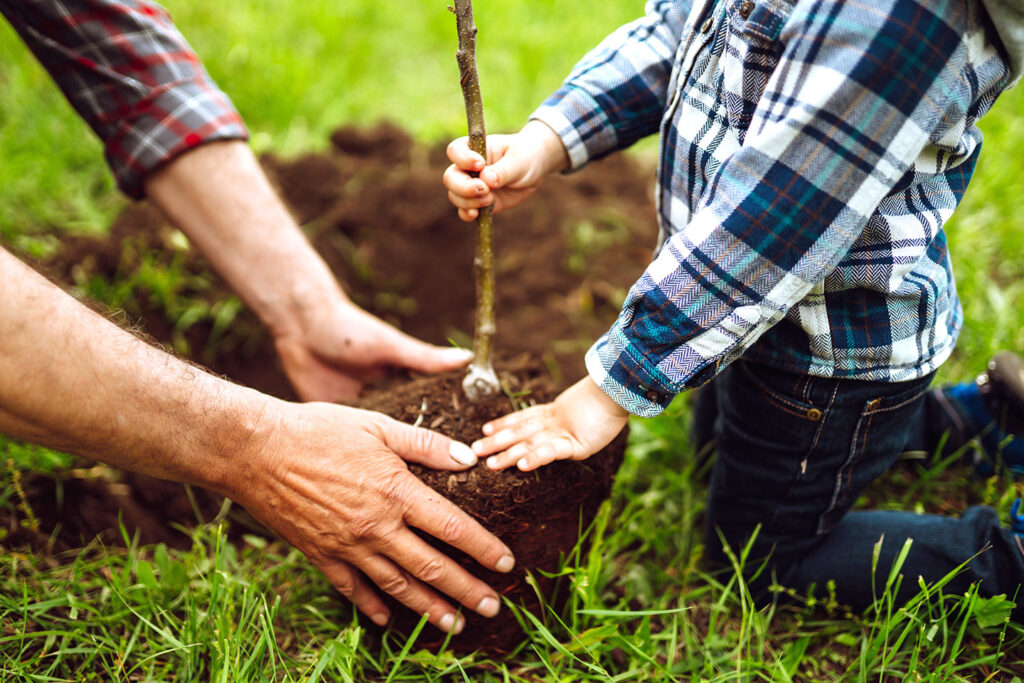
In today's busy world we tend to take things like forests for granted. We enjoy their beauty, recreational opportunities, cooling effects on hot days, and their timber products, but we never think of the men, women and youth of the past that had the foresight to plant the trees that give us our forests today.
With the help of Edmund Zavitz (1875 - 1968), many local families planted thousands of trees on private lands across Northumberland County and the Regional Municipality of Durham.
The original impetus was to control soil erosion on barren lands such as the Oak Ridges Moraine and to mitigate downstream flooding in settlements such as Port Hope. Ganaraska Conservation offers a variety of stewardship programs, directly or in conjunction with other organizations, to help watershed property owners plant native trees and shrubs.
Since 2007, and across the GRCA, more than 500 projects have been implemented through the Clean Water-Healthy Land Financial Assistance Program by property owners, schools, businesses and community groups.
The Regional Municipality of Durham, Municipality of Clarington, Municipality of Port Hope, Township of Hamilton and Town of Cobourg invested over $650,000.00 towards these projects, while landowners have contributed more than $2.2 million of their own money. The approximate monetary value of these projects is more than $3.4 million.
Project types funded include tree and shrub planting, livestock fencing from streams and woodlots, well upgrades and decommissions, agricultural best management practices (no-till drills and GPS units), clean water diversion, and many more.
Approximately 30% of the population within the GRCA is dependent on private groundwater supplies for drinking water, bathing and household tasks. However, many well owners do not regularly test their water or inspect their well.
Consider having a free site visit from qualified GRCA staff. Staff will evaluate the structure of your well and the surrounding area. Recommendations will be given on how to better protect your important source of water. It is then up to the well owner to determine how to best proceed. Generally, problems with water quality area a result of poor well structure that allows surface water to enter the well. To book your free well site visit, contact the Conservation Lands Coordinator.
Consider testing your water a minimum of two times per year, ensuring you are testing the actual water, not water treated by a water softener or treatment device (e.g. UV filter). These tests are free and indicate the concentration (if any) of total coliform and E. coli.
To learn more about well water testing, contact your local agency:
Administration Office
2216 County Road 28
Port Hope, ON L1A 3V8
T: 905.885.8173
F: 905.885.9824
Ganaraska Forest Centre
10585 Cold Springs Camp Road
Campbellcroft, ON L0A 1B0
T: 905.885.8173
F: 905.797.2545
GRCA Stewardship Programs
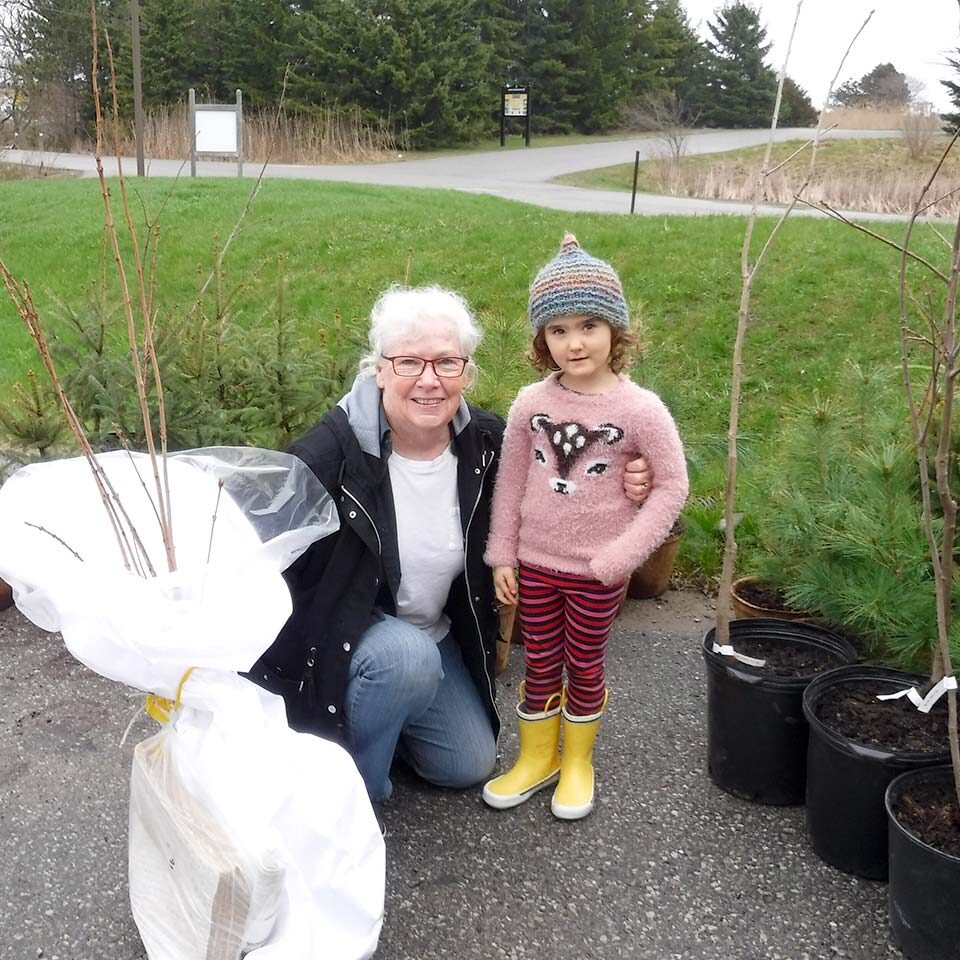
Participating in the GRCA Tree & Shrub Seedling Program allows property owners to purchase and plant bareroot native tree and shrub seedlings. Seedlings can be ordered in late fall through winter for a spring delivery. The minimum order is 25 seedlings/bundle per species. Orders due by March 6th, 2026.
ORDERS NOW CLOSED FOR 2026
View the GRCA Tree & Shrub Seedling Order Form (PDF).
The total cost includes the cost of the seedling, an administrative fee and HST.
To find out more about the GRCA Tree & Shrub Seedling Program or to arrange for your free site visit, contact the Conservation Lands Coordinator.
Funding for tree planting may be available, please see the Clean Water-Healthy Land Financial Assistance Program.
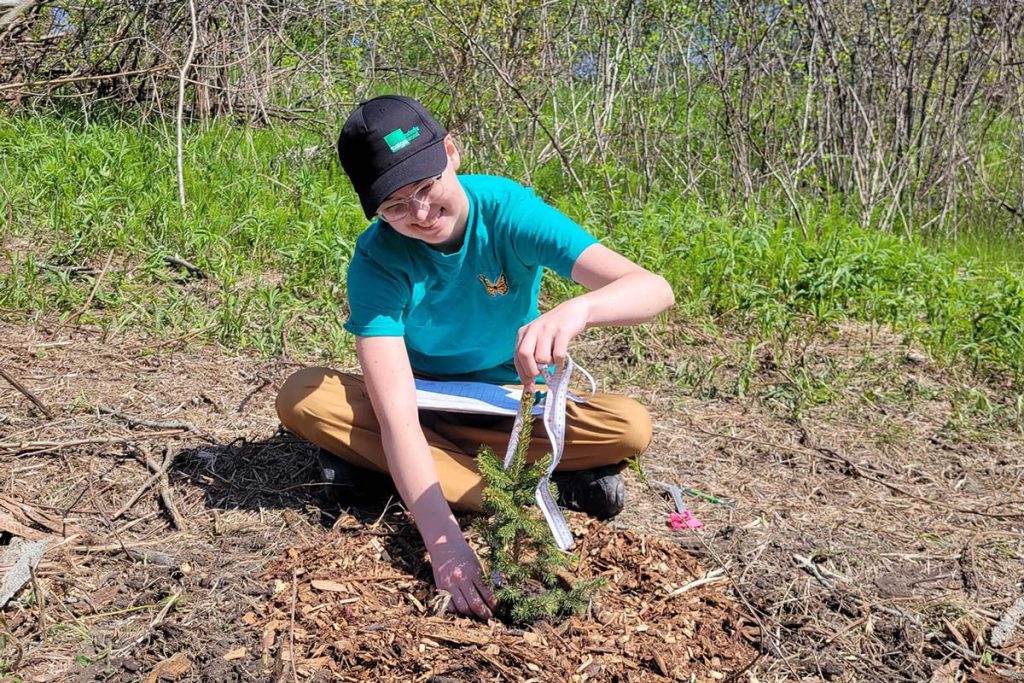
If you would like to increase the number of native trees and shrubs on your property, but are unable to plant them yourself, let the GRCA do the hard work for you. 500 or more native trees and shrubs can be planted for a fee. A planting plan is developed with your property goals in mind.
The total cost to plant a tree varies and, costs $3 per seedling on average. Costs include planting stock, hand or machine planting, an administration fee, shipping fee, site preparation, one-time post-planting tending and HST. Seedlings are either hand planted or machine planted, depending on site conditions.
To find out more about the GRCA Full-Service Tree Planting Program or to arrange for your free site visit, contact the Conservation Lands Coordinator.
Funding for tree planting may be available, please see the Clean Water-Healthy Land Financial Assistance Program.
In the middle and late 19th century, farmers planted native maples, taken from their woodlots, along their property edges and on their lane ways. This gave rise to an important element in the rural landscape — lines of stately maples alongside roads and separating farmer's fields.
The legacy of maple trees is embedded in many people's memories and part of the rural aesthetic. These century (and older) trees are now succumbing to old age, exposure to wind, insects and disease. They are often not being replaced and that part of the rural/cultural landscape is now in jeopardy.
Trees are provided to approved applicants to be planted next to a municipal road on private property. Remember that consideration must be given to overhead and underground utilities, especially hydro lines. Applications are available from January to March of each year, and trees are available for pick-up late April/early May.
APPLICATIONS CLOSED FOR 2026
Trees for Rural Roads is offered within:
Applications are due by March 31st, 2026.
Since 2012, over 12,000 trees have been planted along rural roads.
To find out more about the program or to apply, contact the Conservation Lands Coordinator.
T TREE planting for future forests
R RESILIENT to mitigate the impacts of climate change
E ENSURE a healthy future for the surrounding community
E ENHANCE natural connections across our watersheds
S SAVING our planet, one tree at a time
Recognizing the numerous benefits of trees, this climate action initiative is a nature-based solution, with the goal of increasing forest cover in the Region by over 30%. So, if you've ever thought about adding trees to your property — for whatever the reason — there's no better time!
To find out more about tree-planting on your land, visit the TREES website.
Contact the GRCA TREES program lead Pam Lancaster or phone 905-885-8173, ext 322